An Expedition Into the Sleeping Mind
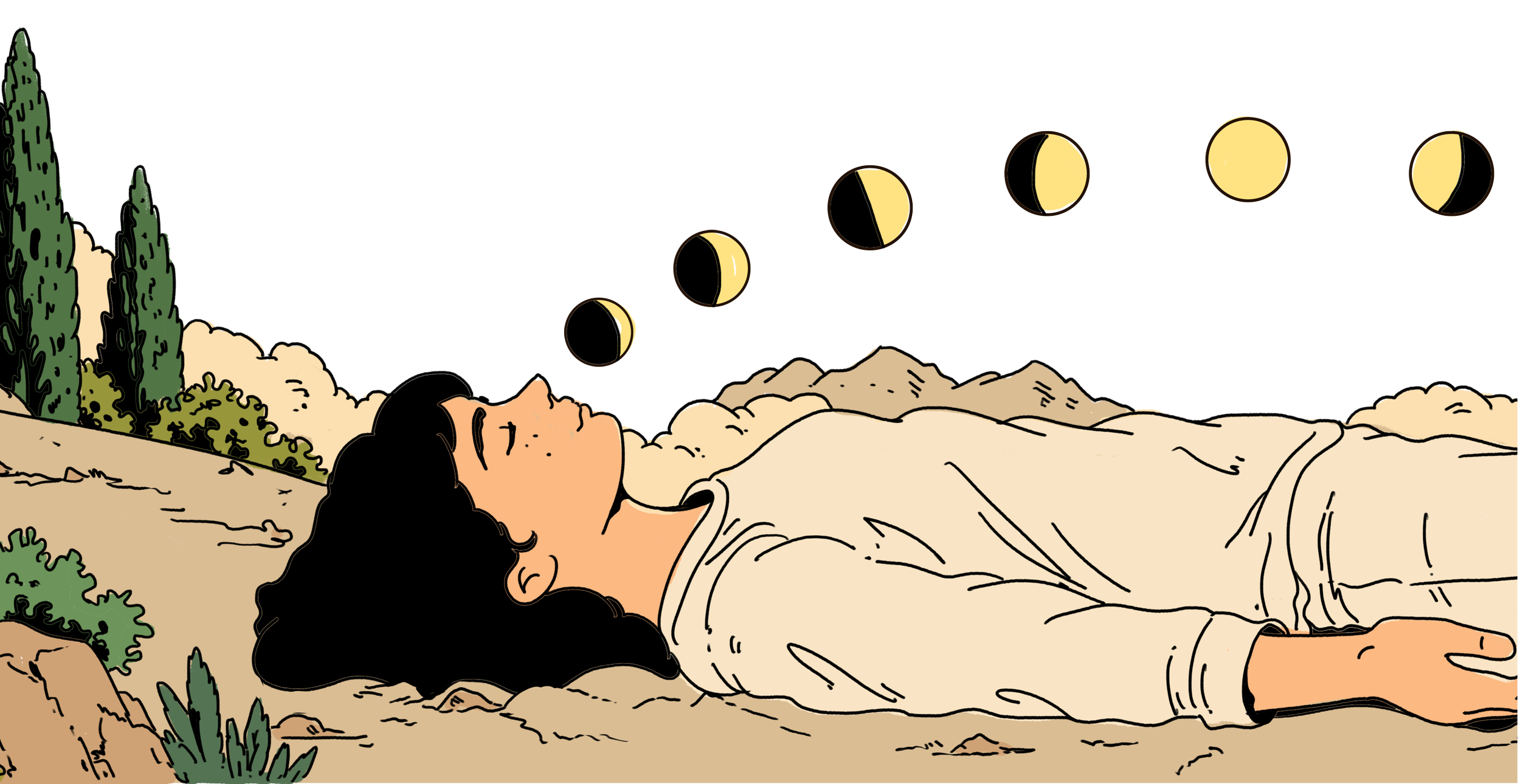
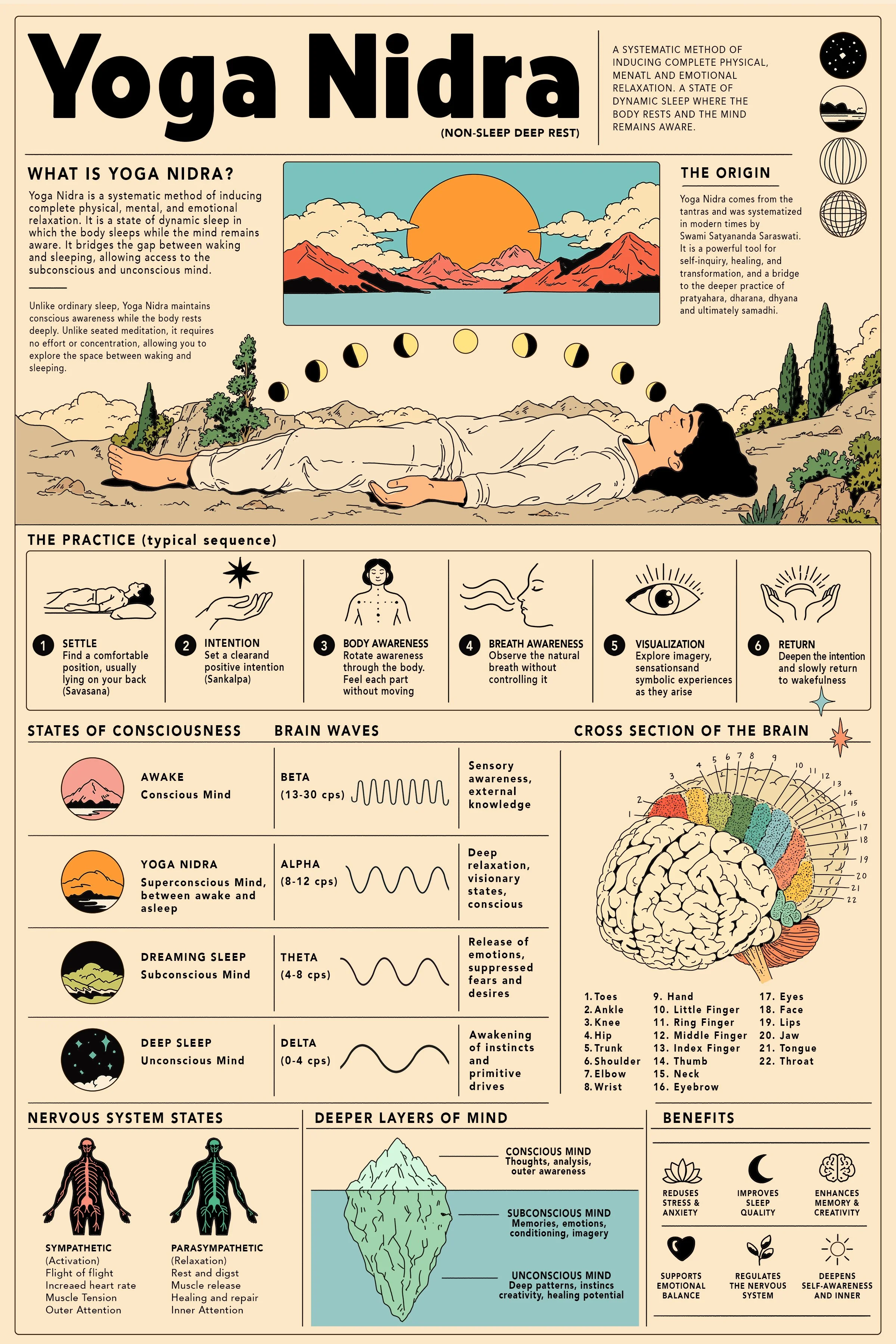
Forty days of yoga nidra, the science of conscious rest, and an investigation into the mysterious territory between waking and sleeping.
The Experiment
Every night, somewhere between turning off the lights and falling asleep, we perform one of the strangest acts of our existence. We close our eyes, gradually lose contact with the world around us, and surrender our awareness to a process we understand surprisingly little about. Hours later, we return, occasionally carrying fragments of another world: a conversation with someone who has been dead for years, a house that doesn't exist, or the unmistakable sensation of falling.
We spend approximately a third of our lives asleep. During that time, our brains remain remarkably active, processing memories, coordinating electrical rhythms, and carrying out essential biological functions. Yet the subjective experience of sleep remains something of a mystery.
I've spent years fascinated by the boundaries of human perception. Through my work as an artist, I've explored how we experience the world around us. Through yoga and meditation, I've become increasingly curious about what happens when attention turns inward.
Recently, those interests have led me back to yoga nidra, a contemplative practice often translated as yogic sleep. I'm undertaking a 40-day sadhana, or dedicated daily practice, to investigate its relationship to the nervous system, brain activity, sleep, memory, and consciousness.

What Is Yoga Nidra
Yoga nidra is often described as deep relaxation, but the practice is far more involved than simply lying down and resting. In the method developed and popularized by Swami Satyananda Saraswati during the twentieth century, the body remains still while awareness is systematically directed through different sensations, thoughts, and imagined experiences.
The practice draws on older yogic and tantric traditions, including nyasa, the placement of attention upon different parts of the body, and pratyahara, the withdrawal of attention from external sensory objects.

A typical session begins with a sankalpa, or personal intention, followed by the rotation of consciousness through the body. Attention then moves toward the breath, contrasting sensations such as heaviness and lightness, and guided visualization. Throughout the process, the practitioner is encouraged to remain aware, even as the body becomes deeply relaxed.
What fascinates me is how much is happening internally. We can direct attention toward a thumb without moving it, imagine the sensation of cold without changing our temperature, or visualize an entire landscape with our eyes closed. Each exercise reveals something about the brain's remarkable ability to construct experience.
What Happens Inside the Brain?
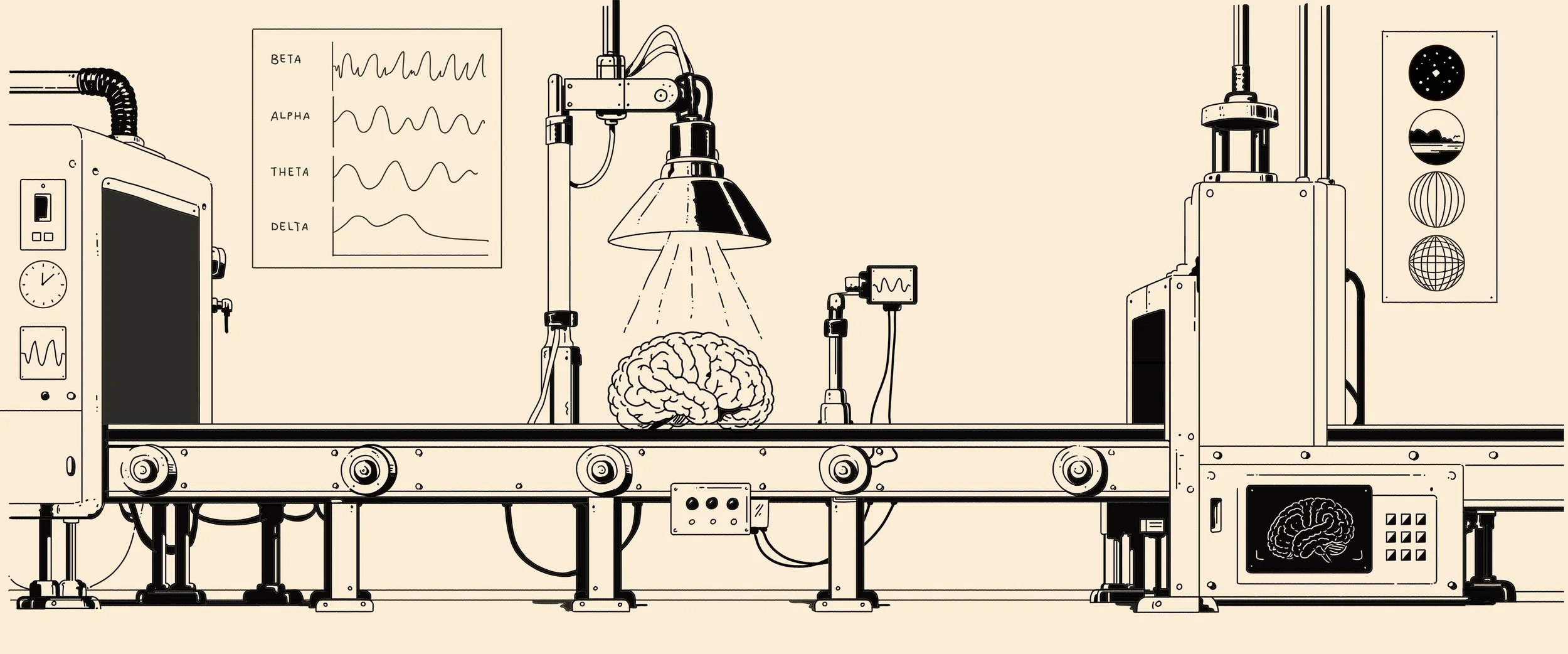
One way scientists investigate sleep and consciousness is through electroencephalography, or EEG, which records patterns of electrical activity from the scalp. These patterns are commonly described in frequency bands, including beta, alpha, theta, and delta.
Beta activity is frequently associated with active wakefulness, while alpha rhythms are often prominent during relaxed, eyes-closed states. Theta activity appears during drowsiness, early sleep, and certain memory-related processes, while slow delta activity is especially prominent during deep non-REM sleep.
These aren't separate levels of consciousness that the brain passes through in a neat sequence. Multiple rhythms can coexist, and their significance depends on where and when they're measured.
Researchers have observed changes in EEG activity during yoga nidra, including alpha and theta patterns, but the evidence remains preliminary. Scientists have not established a single brainwave signature that defines the practice.
I'm particularly interested in the transition between wakefulness and sleep, when spontaneous images and dreamlike experiences can emerge. Scientists call this transitional territory hypnagogia. Although yoga nidra isn't synonymous with hypnagogia, the practice raises fascinating questions about how awareness changes as the brain becomes less responsive to the outside world.

Can Consciousness be Resting?
Yoga nidra has attracted scientific interest for its potential effects on stress, sleep quality, and physiological regulation. Some studies have reported promising improvements, although the research is still developing and many investigations have involved small groups or differing methods.
The autonomic nervous system, which helps regulate breathing, heart rate, digestion, and responses to stress, is particularly relevant. Deep relaxation may be accompanied by changes in physiological arousal, but the familiar idea that yoga nidra simply switches off the sympathetic nervous system and activates the parasympathetic system oversimplifies a much more complex process.
I'm curious whether repeated practice can influence how we experience and recover from stress, and whether becoming more attentive to internal sensations changes our relationship with the body.
The distinction between feeling restored and demonstrating a measurable physiological change is important. Yoga nidra may be beneficial without every traditional therapeutic claim being scientifically established. It also cannot be assumed to replace the biological functions of ordinary sleep.
The Mystery of Memory
Sleep plays an essential role in memory consolidation, helping the brain stabilize and reorganize information acquired during waking hours. During certain stages of sleep, coordinated activity involving the hippocampus and cerebral cortex contributes to these processes.
This raises an intriguing question: could yoga nidra influence learning or memory?
Satyananda's writings describe the mind as particularly receptive during yoga nidra, but modern research has not established that the practice reproduces the memory-related functions of ordinary sleep.
Still, I'm fascinated by the possibilities. Could guided rest influence attention before learning? Might the combination of imagery, intention, and relaxation affect what we remember? And could improvements in sleep indirectly support memory?
These are questions I'd love to explore with researchers studying the sleeping brain.
Forty Days in the Field
For now, my investigation is considerably less sophisticated than a neuroscience laboratory. There are no electrodes or brain scanners, just a daily practice, a notebook, and a growing collection of questions.
I've chosen forty days as a period of consistent observation, not because forty days represents a scientifically established threshold for changing the brain. I'm curious whether the experience evolves with repetition, whether certain sensations or images recur, and whether I notice changes in my sleep, dreams, attention, or ability to settle.
This is a personal investigation rather than a controlled experiment. I won't be able to establish cause and effect, but I can observe carefully, challenge my assumptions, and develop better questions. Perhaps what fascinates me most is the unusual relationship between the observer and the observed. We use the brain to investigate the brain, and awareness to examine awareness itself.
For centuries, contemplative traditions have developed methods for exploring subjective experience from within. Modern neuroscience approaches many of the same mysteries through measurement and experimentation. These methods are different, but I find the possibility of bringing them into conversation enormously exciting. I don't know what I'll discover over the next forty days. Perhaps I'll sleep better. Perhaps I'll become more attentive. Perhaps I'll simply develop a deeper appreciation for how much remains unknown about an experience I've practiced for years.
After all, every night we close our eyes and disappear into one of the most extraordinary processes in nature. We do it so routinely that we hardly stop to wonder about it.